Scope
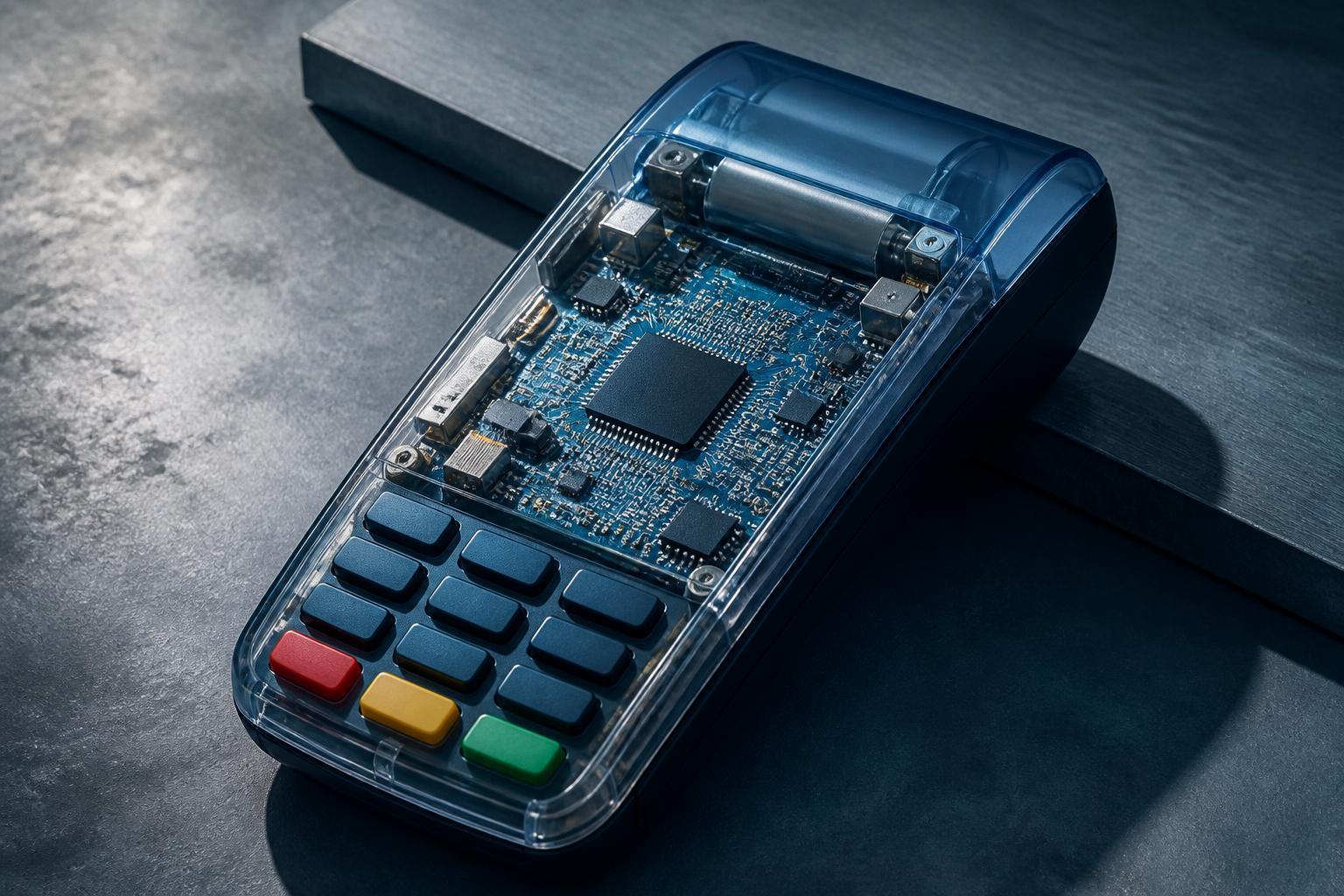
This guide explores how to implement software-based tamper detection in POS environments, focusing on radio-based anomaly detection systems. You'll find mappings to PCI DSS 4.0, deployment considerations for existing terminal fleets, and a framework for evaluating software-defined security controls in your environment.
This isn't about replacing physical security; it's about understanding where software can enhance hardware protections and where it can't.
Key Concepts and Definitions
Wireless Tamper Detection: This software-based method uses existing radio capabilities (NFC, Bluetooth, Wi-Fi) in payment terminals to detect environmental changes that suggest physical tampering. Unlike traditional tamper-evident seals, this approach monitors radio signal patterns and anomalies when devices are opened, modified, or have foreign objects inserted.
Software-Defined Security Controls: These are security measures delivered through firmware or software updates instead of physical hardware changes. They can be updated remotely but depend on the integrity of the underlying hardware and operating system.
Environmental Baseline: This is the normal radio signature profile for a payment terminal in its operational location. Deviations from this baseline, such as changes in signal strength or unexpected radio sources, trigger alerts.
Skimming losses: These reached approximately $1 billion in the U.S. market last year, representing a 5% increase. Traditional detection methods remain vulnerable because attackers study where inspectors look and design attacks accordingly.
Requirements Breakdown
PCI DSS 4.0 Mapping
Requirement 9.5.1.2: Protect devices from tampering and substitution. Software-based tamper detection can supplement, but not replace, physical inspection procedures. You still need visual inspection schedules and documented device inventories.
Requirement 9.5.1.3: Maintain an inventory of devices. Radio-based detection systems generate event logs that should feed into your device management system. Each tamper alert becomes part of your audit trail.
Requirement 6.4.3: Manage changes to payment page scripts. While this requirement addresses digital skimming, the principle applies: you're monitoring for unauthorized modifications, whether physical or logical.
What Software Detection Covers
- Changes to internal radio environment when a terminal is opened
- Insertion of foreign objects that alter antenna behavior
- Unexpected radio sources near the terminal
- Deviations from established environmental baselines
What It Doesn't Cover
- Overlay skimmers that don't penetrate the device housing
- Shimming attacks on EMV card slots that don't disrupt radio patterns
- Network-based attacks (RAM scraping, memory dumps)
- Malicious firmware if the attacker compromises the software detection system itself
Implementation Guidance
Deployment Prerequisites
Before implementing radio-based tamper detection, verify:
Hardware capability: Your terminal fleet must have radio transceivers (NFC, Bluetooth, or Wi-Fi). Older magstripe-only terminals won't support this approach.
Firmware update capability: You need secure remote update channels. If you're still deploying firmware via physical media, software-defined controls aren't practical.
Centralized monitoring: Tamper alerts must route to a monitored system. An alert that sits unread on a terminal screen provides no value.
Baseline establishment period: Plan for 2-4 weeks of baseline data collection per location before enabling active alerting. Radio environments vary significantly between mall kiosks, outdoor terminals, and enclosed checkout lanes.
Integration Points
Alert routing: Configure tamper detection events to trigger the same incident response workflow as physical security alerts. Don't create a separate process; integrate with your existing POS monitoring.
Inspection procedures: Update your physical inspection checklists to include verification that tamper detection software is running and hasn't been disabled. Attackers who understand the system will try to disable it first.
Change management: Software-defined controls create a new attack surface. Your change control process (PCI DSS 6.5.1) must cover tamper detection firmware updates with the same rigor as payment application changes.
Testing Requirements
Run controlled tamper scenarios quarterly:
- Open a test terminal and verify alert generation within your defined threshold (typically 1-5 minutes)
- Insert a test object into the card reader slot
- Move a terminal to verify location-based alerts work correctly
- Simulate a disabled detection service and confirm monitoring catches the gap
Document each test and the response time from alert to investigation.
Common Pitfalls
Treating software controls as hardware replacements: Software detection augments physical security; it doesn't eliminate the need for tamper-evident tape, inspection schedules, or secure terminal placement. PCI DSS 9.5.1 still requires physical controls.
Ignoring false positive tuning: Radio environments change. New Wi-Fi access points, relocated terminals, or even seasonal decorations can trigger alerts. You need a tuning process and documented thresholds, or your team will start ignoring alerts.
Overlooking the bootstrap problem: If an attacker compromises the terminal before you install tamper detection, they can disable the detection software. You need a trusted baseline, typically established during initial terminal provisioning in a controlled environment.
Skipping the threat model update: Adding software-defined controls changes your threat landscape. Update your risk assessment to account for attacks targeting the detection system itself. What happens if an attacker roots the terminal OS?
Neglecting the monitoring gap: Software detection only works if someone responds to alerts. If your SOC doesn't have procedures for POS tamper alerts, or if alerts route to an unmonitored queue, you've gained nothing.
Quick Reference Table
| Control Type | PCI DSS Requirement | Implementation Complexity | Attack Coverage |
|---|---|---|---|
| Physical seals | 9.5.1.2 | Low | Visible tampering only |
| Manual inspection | 9.5.1.2 | Medium | Depends on inspector skill |
| Contact sensors | 9.5.1.2 | Medium-High | Case opening events |
| Radio-based detection | 9.5.1.2 (supplemental) | Medium | Environmental changes, insertions |
| Secure firmware | 6.3.3 | High | Code integrity, anti-malware |
| Network monitoring | 10.4.1.1, 11.5.1 | High | Memory scraping, network exfiltration |
Detection latency targets:
- Physical inspection: Daily to weekly
- Radio-based tamper detection: 1-5 minutes
- Network anomaly detection: Real-time to 1 hour
Key decision point: If your terminals lack radio capability or you can't establish reliable monitoring, invest in more frequent physical inspections and tamper-evident hardware instead. A software control you can't operationalize provides false confidence, which is worse than no control at all.